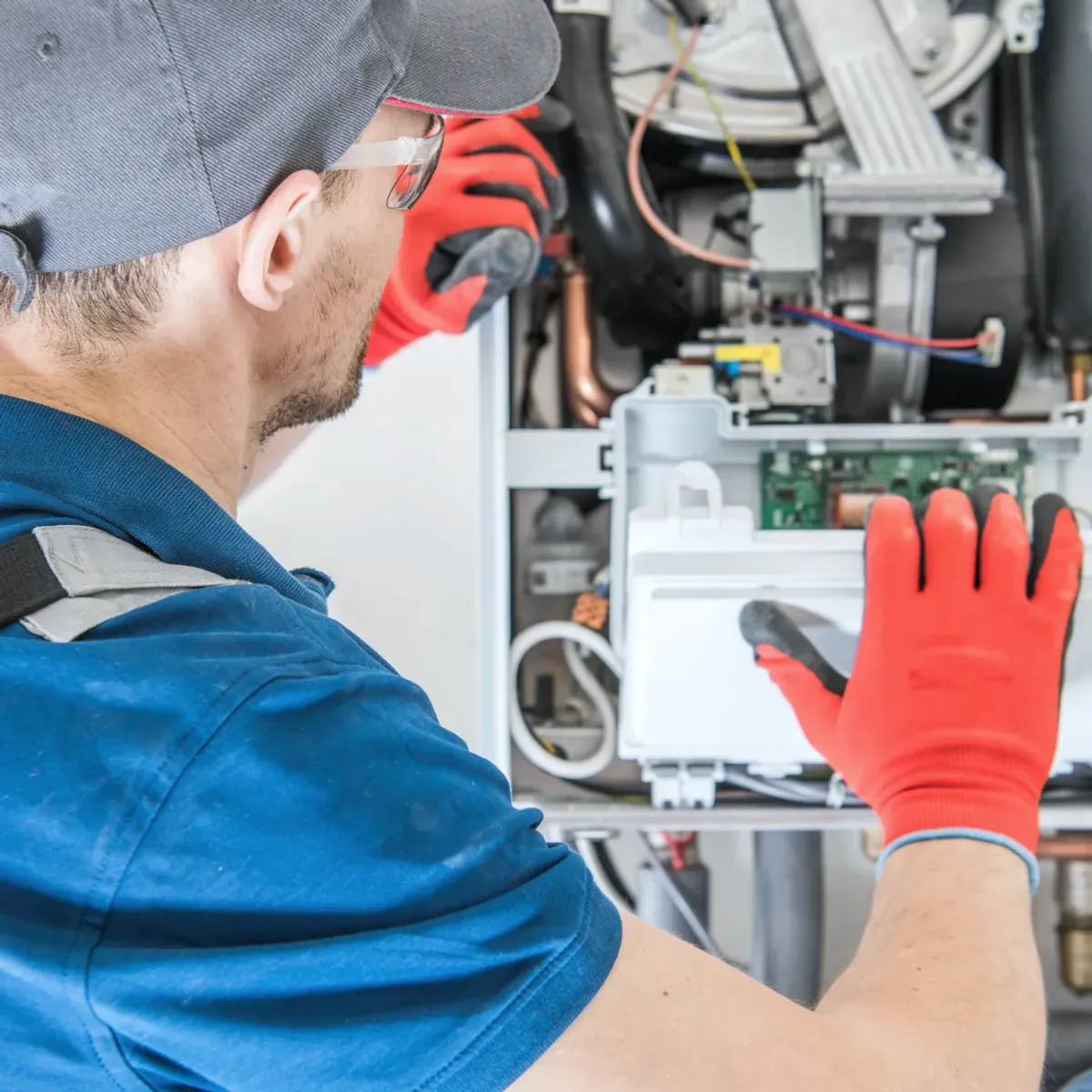
Request boiler service for a property in Cambridge. Include the equipment, the problem or planned work, and your location so the request can be reviewed.
What should be considered when a boiler loses pressure, will not fire, or heats radiators unevenly?
Boiler service depends on both the boiler design and the hydronic distribution it serves. A natural-draft cast-iron boiler connected to radiators differs from a condensing boiler paired with in-floor loops in venting, operating temperatures, and controls. Gas, propane, and oil equipment also have distinct fuel and burner considerations. Diagnosis, maintenance, and replacement are separate decisions: ignition or pressure symptoms call for assessment, while installation planning must account for the heat load and compatibility with existing emitters and controls.
Record the boiler model and fuel, whether it is natural-draft or condensing, the type of emitters, and the symptoms or displayed codes. Inspection can distinguish an ignition or burner fault from circulator, pressure, venting, or distribution problems. These findings matter because a radiator that stays cool may have a different cause from a boiler that will not fire, and replacement must match the connected hydronic system.
Gas, propane, and oil boiler repair and maintenance
Natural-draft cast-iron radiator systems and condensing in-floor systems
Ignition, circulator, pressure, venting, and replacement compatibility
Assessment and Scope
Questions for the Proposed Work
01
Separate ignition faults from pressure and circulation problems
A boiler that will not ignite requires a different diagnosis from one that fires but loses pressure or fails to warm a radiator. Ignition, burner, and fuel-side concerns are not the same as a circulator, system-pressure, air, or distribution fault. Inspection should identify where the operating sequence or hydronic circuit is failing. Do not open the boiler, adjust fuel components, or alter pressure controls; those tasks require qualified service.
02
Match replacement choices to boiler design and emitters
A natural-draft cast-iron boiler serving radiators may have different venting and water-temperature requirements from a condensing boiler serving in-floor radiant loops. Replacement planning should account for the building heat load, fuel, vent configuration, emitter requirements, and control compatibility. A condensing model is not automatically a direct substitute for every existing boiler. Comparing the proposed equipment with the connected system helps identify required changes beyond the boiler itself.
03
Base maintenance on inspection and manufacturer instructions
Boiler maintenance may involve inspection of burners, controls, venting, and system pressure, as appropriate to the model and observed condition. Whether water treatment or flushing is needed should follow manufacturer instructions and inspection findings, not an automatic yearly routine. Natural-draft and condensing units have different venting and condensate considerations. A maintenance finding should be distinguished from a repair or replacement recommendation so each decision has a clear basis.
Compare the next step
Give the boiler designer the completed insulation and window specifications before comparing replacement capacity. Ask how the reduced load relates to existing emitters, operating temperatures, and control settings. Separate a present service fault from changes justified by the renovated building, and document the assumptions behind any equipment or distribution recommendation.
Leave fuel, combustion, electrical, and pressure-system work to a qualified contractor. Do not adjust safety devices or repeatedly add water to a system with an unexplained leak or pressure loss.